

Senior Account Manager
Company news | September 21, 2026
Senior Account Manager
For years, influencer marketing was a numbers game with brands looking to find the person with the biggest following to put their product in front of as many people as possible. But today, we’re seeing an emerging trend: businesses realizing that influence is not the same thing as reach. Sometimes, a smaller audience can be more valuable than a massive one.
More than before, businesses are choosing to partner with micro-influencers: content creators with 10,000 to 100,000 followers. Micro-influencers often focus on a particular niche — food, travel, parenting, fitness, fashion, finance or a local community — and build an audience around that expertise or interest.
Influencers are generally grouped into tiers:
Micro-influencers typically have higher engagement rates, which is an important data point when selecting the right creators for a campaign. Engagement rate measures actions such as likes, comments, shares and saves compared to the size of the creator’s audience or the number of people who saw their content.
Creators with fewer followers often build tighter communities and engage more directly with their audiences. Their followers commonly ask questions, request recommendations or share personal experiences in the comments. Those exchanges show that the influencer is not simply broadcasting to an audience but are building a relationship with them.
The case for investing in influencers
People voluntarily follow influencers because they find them useful, entertaining, relatable or interesting. That creates a different relationship than advertising which simply interrupts what audiences are watching or hearing.
There is evidence that this relationship affects buying behavior. Morning Consult reported that 45% of social media users often or sometimes make purchases after seeing someone post about a product on social media. Additionally, a Nielsen study of creator audiences found that over 86% of creator fans trusted creator product recommendations.
There’s also an important comparison with traditional paid advertising: Sprout Social found that when consumers were asked about trusted sources for holiday product recommendations on social media, 35% cited influencer recommendations and brand accounts compared with 21% for paid social ads.
Why micro-influencers can be particularly powerful
Nonprofits, businesses and even municipalities will get much more value from a creator with 25,000 highly relevant, highly engaged followers than from a celebrity with millions of followers scattered around the world.
Micro-influencers are also considerably less expensive. Rates vary based on platform, format, engagement, usage rights and exclusivity, but costs generally increase with audience size. Current Sprout Social benchmarks put micro-influencer posts in the $100-$500 range, compared with $500-$10,000 for macro-influencers and $10,000 or more for mega-influencers.
That lower cost gives businesses another advantage. Instead of putting the entire budget behind one big personality, they can work with several micro-influencers who reach different niches and communities.
If you’re thinking about partnering with a micro-influencer, it’s important to remember that an influencer is providing marketing efforts and should be compensated, whether by cash, product or experience. The team at Goff Public can connect you to the right influencers for your campaign to create the best results.
Influencers do not just sell products
Whether you realize it or not, you’re likely getting much more than product recommendations from the influencers you currently follow.
Pew Research found that about one in five U.S. adults regularly get news from social media news influencers. Among those consumers, 65% said influencers helped them better understand current events and civic issues. Pew also found influencers discussing social issues ranging from race and education to abortion and LGBTQ+ rights.
That means businesses should think about influencers as more than people who hold up a product for the camera. They are communicators, storytellers and community voices.
That is the real power of micro-influencers. Businesses are not simply buying a post but also gaining access to a creator who understands an audience that has already chosen to listen.
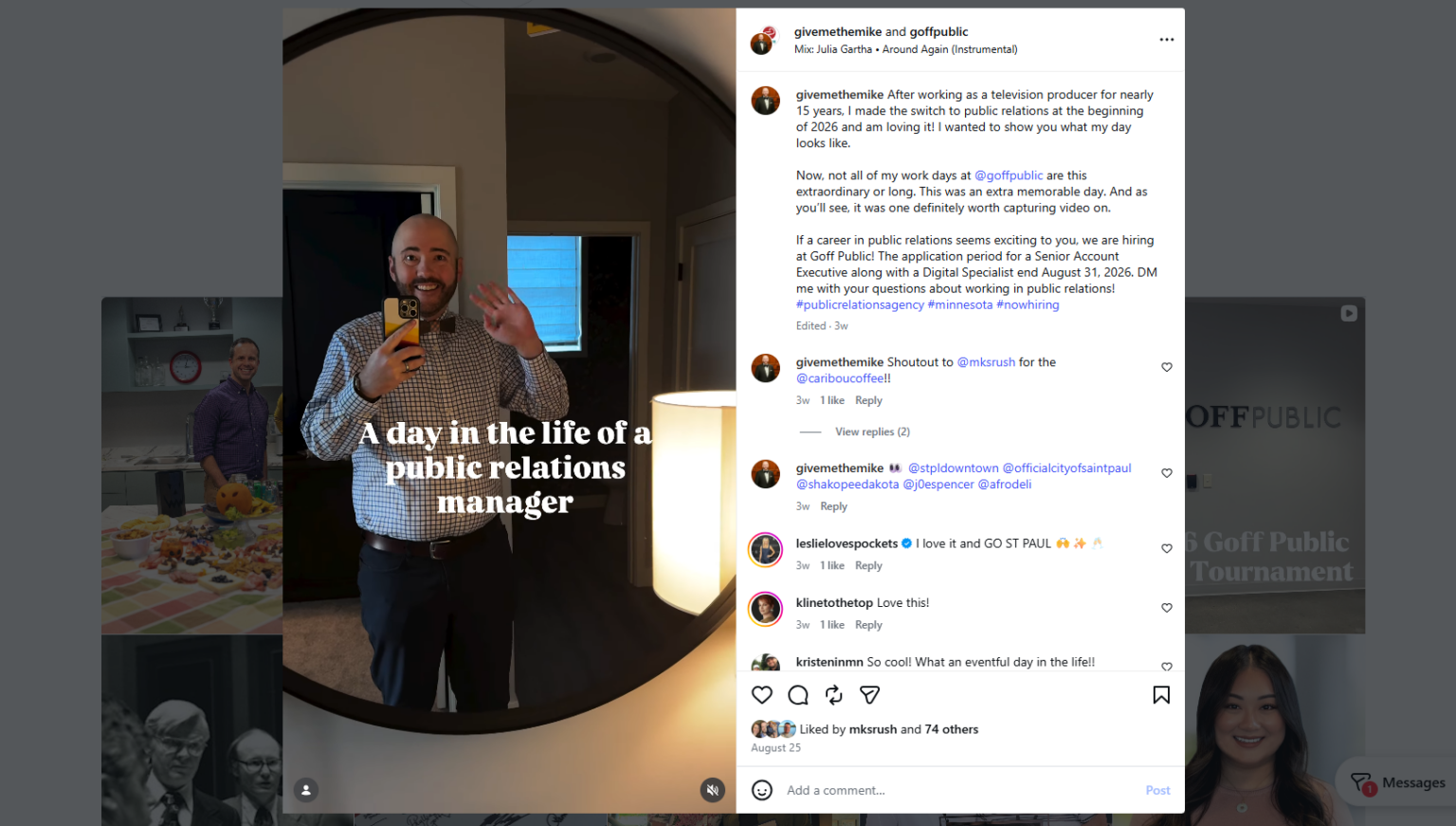
You can follow Mike on Instagram @givemethemike.